History of Kusadasi

Discover the rich history of Kusadasi, from ancient Greek settlements to Ottoman heritage and modern Turkish culture.

History of Kusadasi

The early settlements in Kusadasi were established by the Lelegians and Carians, who migrated from central Anatolia around 3000 BC. They founded a colony on the slopes of Pilav Mountain in Kusadasi and established the cities of Ania and Melia. The mild climate of the region enabled the inhabitants to cultivate essential crops such as olives, grapes, and figs on the fertile lands surrounding the city, which were used for extracting oil, making wine, and producing sweets.

In the 10th century BC, the "12 Ionian Cities," including Samos, Khios, Miletos, Priene, Ephesus, Teos, Erythrai, Priena, Klazonemi, Lebedos, Phokaia, Colophon, and Smyrna, were established and renowned as the most developed cities of that era. The annual meeting place of the Ionian League, Panionian, was situated around Kusadasi, where the cities of Phygale, Marathesion, and Neopolis were also founded. During this period, the ports of Phygale and Neopolis were not bustling or necessary, as they were in close proximity to the renowned trading centers and ports of Miletos and Ephesus.

In approximately 546 BC, the city was invaded by the Persians. By 200 BC, Kusadasi and its surroundings came under the rule of the Roman Empire, and following the division of the Roman Empire, it became part of the Byzantine state. Due to significant earthquakes and alterations in the course of the Caystros River brought about by changes in climate, Ephesus suffered extensive destruction, leading to a decline in its significance and prosperity. Consequently, the Byzantines sought a new port and trade route, ultimately settling on the area around Neopolis. Recognized by Greek, Jewish, and Armenian merchants, this new port, named "Scala Nova," became an alternative trading hub to Ephesus, complementing the historical cities of Ania, Melia, Phygale, and Neopolis, which laid the early foundations of present-day Kusadasi. By the 15th century, Scala Nova fell under the control of Venetian and Genoese sailors and traders, who established consulates in the area. Turkish dominance in the region began with the invasion of Seljukian Kilic Arslan the 2nd. Kusadasi's strategic location at the end of important trade routes, such as the Silk Road previously held by Ephesus, played a pivotal role in the city's positive development in trade.

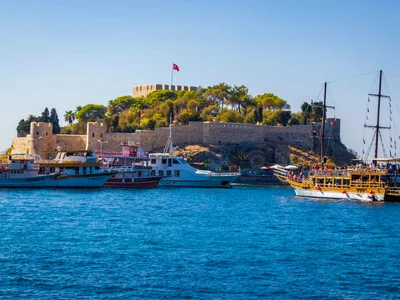
Kusadasi began to be ruled by the Ottoman Empire after the invasion of Sultan Mehmet Celebi in the year of 1413. During the reign of Ottomans, Kusadasi was introduced to glorious structures, giving a new look to its former spectacular view. Okuz Mehmet Pasa Caravanserai is the principal of Ottoman architecture in the city, was built by the man of the same name, who was the vizier during the reigns of Sultan Ahmet1 and Osman2. The fortress gates, walls and many mosques in the center of Kusadasi, as well as the citadel of the castle in Pigeon Island, were built in the Ottoman period, reflecting the architectural style of the era. "Kusadasi" that means "bird island" took its name from the Pigeon Island.

Following the First World War, the Greeks invaded Kusadasi in 1919. After a prolonged struggle, the fishing village successfully regained its independence in 1922, becoming a part of the Turkish Republic. Until 1954, Izmir served as the capital of Kusadasi. Subsequently, the capital was relocated to Aydin, marking a period of significant development for Kusadasi, particularly in the tourism sector.

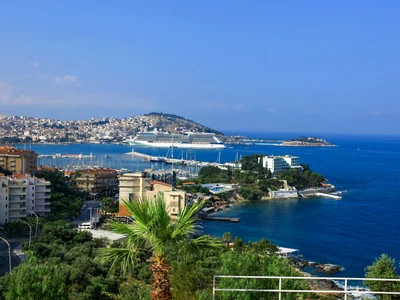
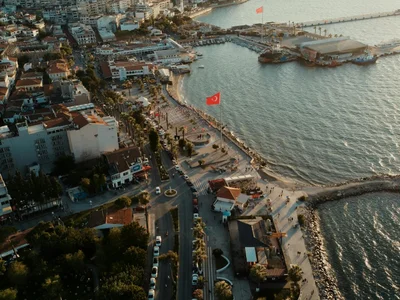
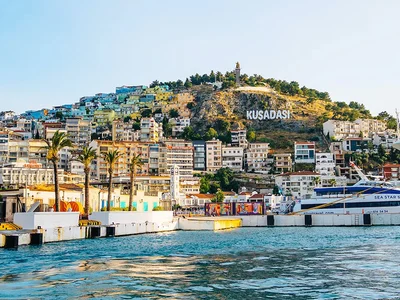
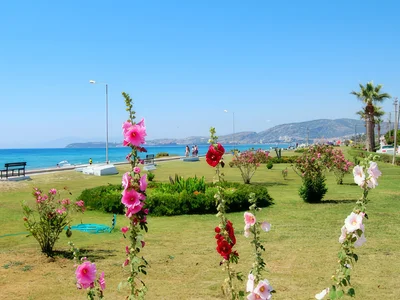
Presently, Kusadasi stands as one of Turkey's premier holiday destinations, renowned for its pristine sandy beaches and crystalline waters. The juxtaposition of vibrant holiday activities with the serene ambiance of ancient ruins contributes to the city's unique atmosphere.
Frequently Asked Questions

Who were the first inhabitants of the Kuşadası area?

The first known settlers in the region were the Lelegians and Carians. Arriving around 3000 BC from central Anatolia, they founded early communities like Ania and Melia on the slopes of Pilav Mountain and cultivated olives, grapes and figs on fertile land.

What role did Kusadası play in the era of the Ionian League?

By the 10th century BC the area was surrounded by prominent Ionian cities and served as the meeting place for the Panionian League. Near Kusadası, cities such as Phygale, Marathesion and Neopolis were founded and participated in regional decisions.

Which empires ruled Kusadası before the Ottoman era?

Around 546 BC Kusadası was conquered by the Persians. By 200 BC it came under Roman rule. After the fall of unified Rome it became part of the Byzantine state, when a shift occurred from Ephesus to the port at Neopolis, later named Scala Nova.

How did the name “Kuşadası” originate?

The modern name derives from the Turkish words for “bird island.” It refers to Güvercinada (Pigeon Island), a small island fortress off the coast that became central to the town's identity under Ottoman rule.

What was Scala Nova and why was it important?

Scala Nova (literally “new port”) emerged in Byzantine times when trade routes shifted away from Ephesus. Greek, Jewish and Armenian merchants developed Scala Nova into a key trading harbor that later formed the core of the modern town.

What structures from the Ottoman period remain in Kusadası today?

Notable Ottoman-era landmarks include the Öküz Mehmed Pasha Caravanserai, the town’s fortress gates and walls, mosques, and the castle on Pigeon Island: all dating to the early Ottoman period following the 1413 conquest.

How did Kusadası change after World War I and become part of modern Turkey?

Between 1919 and 1922 the town was briefly occupied by Greek forces. It was restored to Turkey after the War of Independence in 1922. Initially administered from İzmir, it became part of Aydın Province in the early 1950s, later developing into a major holiday destination.

What are key ancient sites linked to Kuşadası's early history?

Early sites include Ania, Melia, Panionion and the Panionic League monument. These Ionian-era ruins and the ancient valley settlements lie in the hills and national park outside modern town.

Why were the Lelegians and Carians significant in Anatolia?

The Lelegians are considered pre‑Greek inhabitants of the Aegean, and later were associated with the Carians. Herodotus linked Lelegians with the Carians: seafaring Anatolian groups central to early coastal settlement.

How does Kusadası’s history contribute to its modern character?

Historically a crossroads of ancient tribes, Romans, Byzantines, Venetians and Ottomans, Kuşadası blends beaches and modern amenities with deep archaeological roots: especially in nearby Ephesus and early Ionia.


Share This Article

Found this helpful? Share it with your network!

Our Kusadasi Guide Pages

Explore our in-depth guides to plan your perfect Kusadasi visit

Kusadasi Beaches

Dive into the sparkling turquoise waters and sink your toes into the golden sands of Kusadasi's stunning beaches.

Kusadasi for Cruise Passengers

A quick guide to exploring Kusadasi during your cruise stop, including must-see sights, local shopping tips, and how to make the most of your short visit.

Izmir Airport (ADB) to Kusadasi

A Complete Transfer Guide: Izmir Airport to Kusadasi transfer guide with all options including shuttle bus taxi and car rental for a smooth start to your trip.

Kusadasi Nightlife

As the sun dips below the Aegean horizon, Kusadasi truly comes alive! Are you ready to immerse yourself in the vibrant nightlife?

National Park

Escape the bustle and immerse yourself in the pristine beauty of Kusadasi's Dilek Peninsula-Büyük Menderes Delta National Park.

History of Kusadasi

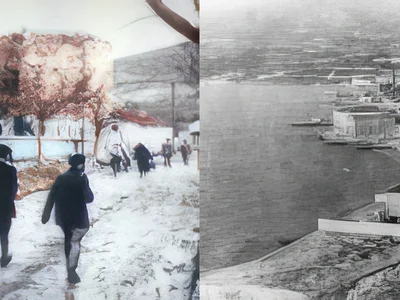
The early settlements in Kusadasi were established by the Lelegians and Carians The early settlements in Kusadasi.

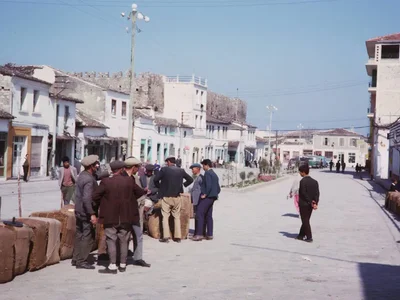
Kusadasi Photos from 1965

The vintage photos from 1965, courtesy of Charles W. Cushman, offer a captivating glimpse into the past of Kusadasi.

Kusadasi FAQ

Everything you need to know about visiting Kusadasi, Turkeys.

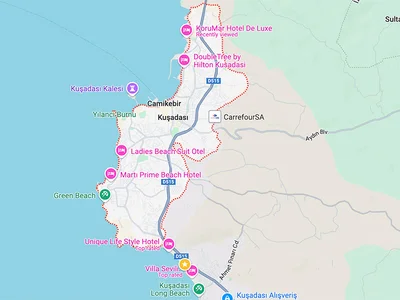
Interactive Kusadasi Map

Discover all the amazing places Kusadasi has to offer with our interactive map. Explore the best beaches, restaurants, attractions, and more.